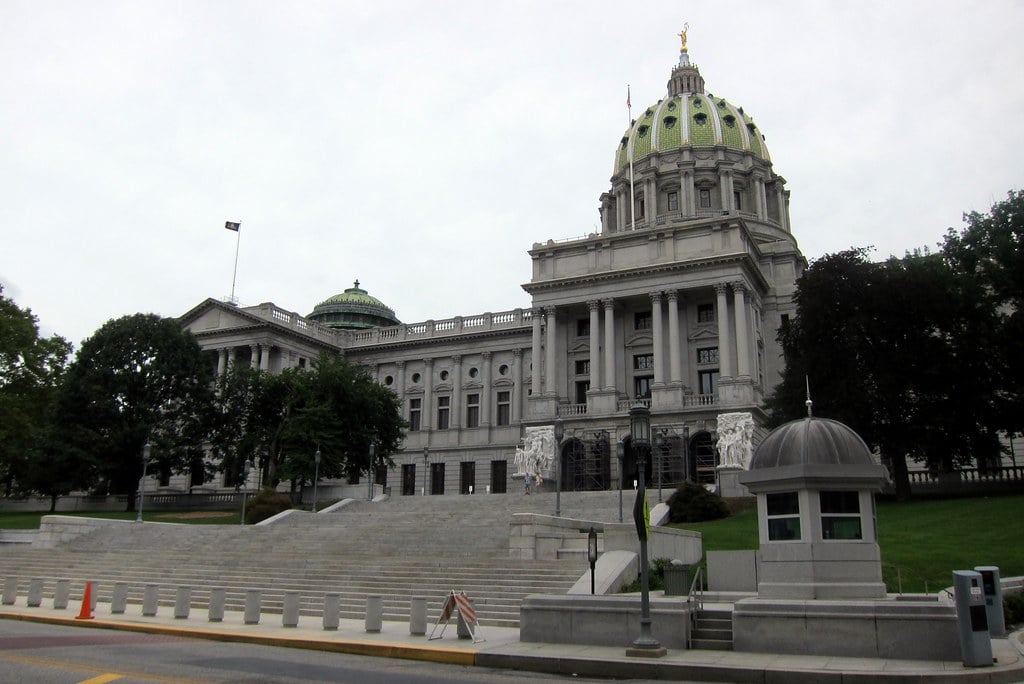


Gov. Josh Shapiro delivered his 2026-27 budget proposal in an 84-minute address before a joint session of the state House and Senate on Tuesday, outlining an agenda focused on economic growth, workforce development, infrastructure investment, public safety, and consumer affordability. The proposal combines new spending initiatives, regulatory reforms, and a series of legislative requests..
The budget calls for expenditures of $53.3 billion, while estimating the state’s revenues at only $48.68 billion with the shortfall requiring a transfer of $4.6 billion from the state’s reserves
Proposed New Revenue Streams
In framing a roughly $53.3 billion fiscal 2026-27 budget, the Governor’s address and accompanying documents highlight a continued reliance on existing revenue sources while leaning on targeted, non-broad-based revenue generators to bolster the state’s fiscal footing without raising major tax rates. Key proposals include regulatory and tax frameworks for new or expanded activities that could produce hundreds of millions of dollars in recurring state revenue:
- Regulation and taxation of “skill games” — machines located in bars, clubs, and other establishments — which the Governor has proposed structuring under state gaming oversight and taxing at levels that could bring significant new receipts into state coffers.
- Cannabis legalization and taxation — building on longstanding legislative debate, Shapiro reiterated support for a regulated adult-use cannabis marketplace with a dedicated tax structure, with prior projections suggesting substantial multi-year revenue potential under a fully developed system.
- Additional specialized revenue adjustments, including changes to transfers from sales and use tax receipts into dedicated funds (e.g., expanded transit revenue transfers), though the administration did not recommend sweeping increases to broad-based taxes such as income or sales levies in the address itself.
Economic Development and Innovation
The Governor opened by highlighting what his administration described as record economic growth, including more than 21,500 new jobs and stronger-than-projected state revenues. He pointed to major private-sector investments such as Eli Lilly’s manufacturing expansion in the Lehigh Valley, Mitsubishi Electric Power Products’ new facility in Beaver County, and several smaller regional manufacturing and life-sciences projects. Building on these efforts, the budget proposes “Innovate NPA 2.0,” a renewed state-backed innovation and seed-capital initiative designed to support startups, life-sciences research, and workforce pipelines tied to emerging industries.
Transit, Infrastructure, and Data Centers
The Governor called for sustainable, recurring mass-transit funding beginning in 2027, arguing that reliable public transportation is essential to regional competitiveness and workforce access. He also announced new “responsible infrastructure development standards” for data centers, tying state support and tax incentives to requirements such as on-site power generation or fully funded grid upgrades, transparency with host communities, local workforce hiring, and strong environmental protections—particularly around water use.
🎥 Clip: Transit Video Clip from Gov's Address
Artificial Intelligence and Public Safety
A major portion of the address focused on AI-related risks and opportunities. While positioning Pennsylvania as a national leader in responsible AI infrastructure development, the Governor also warned about the dangers of unregulated AI companion bots, particularly for children and seniors. He directed multiple state agencies to explore legal action against fraudulent or harmful AI applications and urged the General Assembly to adopt bipartisan safeguards, including age verification, parental consent requirements, mandatory disclosures when users interact with AI, and restrictions on explicit or harmful content involving minors.
🎥 Clip: AI and Data Infrastructure Clip from Gov's Address
Education, Workforce, and Career Pathways
The proposed budget includes additional investments in K–12 education, special education, and student mental-health services. The Governor highlighted record school funding levels, expanded free breakfast programs, and increased staffing for school-based counselors. He also called for a statewide ban on student cell-phone use during school hours and directed the State Board of Education to develop recommendations guaranteeing recess time.
In higher education and workforce development, the Governor urged lawmakers to fund the new performance-based higher education formula and proposed additional investments in career and technical education, apprenticeships, and adult education programs. These initiatives are framed as part of a broader effort to expand multiple career pathways beyond traditional four-year degrees.
🎥 Clip: Public Education Funding Increases
🎥 Clip: Investing in Pennsylvania's Higher Education and Workforce Development
Minimum Wage, Tax Policy, and Licensing Reform
The Governor again pressed the legislature to raise the minimum wage to $15 per hour, arguing that higher wages would reduce reliance on public assistance programs and lower Medicaid costs over time. He also highlighted existing tax credits aimed at working families and announced plans to move forward with regulation and taxation of skill games and comprehensive cannabis reform.
Additionally, the administration outlined continued efforts to streamline professional licensing processes, reduce degree requirements for certain state jobs, and eliminate unnecessary barriers that delay workers’ entry into the labor force.
🎥 Clip: Advocating for Minimum Wage Increase in Pennsylvania
Elder Protection, Fraud Prevention, and False-Claims Enforcement
The Governor urged lawmakers to modernize the Older Adults Protective Services Act to explicitly include financial exploitation and strengthen prosecutorial tools to combat elder fraud. He cited a local case in which Reverend Keith Marsh and his wife reportedly lost approximately $850,000 to bank-impersonation fraud, underscoring the growing risks facing seniors.
The address also highlighted reforms at the Department of Aging to increase oversight of Area Agencies on Aging and publicly post performance results to improve transparency and accountability. On enforcement, the administration reported that in 2024 the Commonwealth charged 119 Medicaid fraud cases and recovered approximately $11 million in misused funds. The Governor further called on the General Assembly to pass a state-level False Claims Act to expand the state’s ability to recover improperly spent public dollars.
🎥 Clip: False Claims Video Clip
Energy Affordability and Utility Oversight
On energy costs, the Governor announced new administrative actions targeting utility transparency and consumer protection. These include enhanced oversight by the Public Utility Commission, the creation of a special counsel focused on energy affordability, and efforts to limit excessive utility profit margins. He argued that these measures, combined with voluntary commitments from major utilities, could save Pennsylvanians hundreds of millions of dollars annually.
Republican Response and Opposition Perspective
House Republican Leadership responded by criticizing the Governor’s proposal as fiscally unrealistic and overly reliant on future tax increases and new spending commitments. GOP leaders expressed concern that the budget expands government programs without sufficient long-term funding safeguards and warned that new mandates—particularly around minimum wage increases, energy regulation, and transit funding—could place additional burdens on employers and taxpayers. They emphasized a preference for what they described as “responsible budgeting,” prioritizing core services, limiting growth in state spending, and maintaining a competitive tax and regulatory environment to attract private investment.
Senate Republicans echoed similar concerns, arguing that the proposed budget does not adequately account for long-term structural deficits and rising entitlement costs. Senate GOP leadership highlighted skepticism about expanding recurring spending commitments, particularly for transit subsidies and wage mandates, and raised questions about the administration’s energy proposals, warning that increased regulation could drive up utility costs rather than reduce them. Senate Republicans also reiterated calls for a more restrained budget approach focused on fiscal sustainability, workforce participation incentives, and private-sector-led economic growth.
What Comes Next
With the Governor’s proposal now formally introduced, the General Assembly will begin budget hearings and negotiations over the coming weeks. Key areas to watch include transit funding, minimum wage legislation, energy and utility oversight proposals, AI and technology regulation, education funding formulas, and elder-protection and fraud-prevention legislation.
Below is a schedule of upcoming PA Budget Hearings.
Pennsylvania Budget Hearings
🎥 Live Stream: pasen.gov/Video/nob.cfm -||- https://pahouse.com/live
Monday, February 23
- Senate — Department of Education (9:30 AM)
- House — Judiciary (10:00 AM)
- House — Corrections / Parole Board (1:00 PM)
- Senate — Department of Education (Continued) (1:00 PM)
Tuesday, February 24
- Senate — Department of General Services (9:30 AM)
- House — Insurance Department / PENNIE (10:00 AM)
- House — Health & Drug and Alcohol Programs (1:00 PM)
- Senate — Pennsylvania State Police (1:00 PM)
Wednesday, February 25
- Senate — Department of Human Services (9:30 AM)
- House — Community & Economic Development (DCED) (10:00 AM)
- House — Department of Agriculture (1:00 PM)
- Senate — Department of Human Services (Continued) (1:00 PM)
Thursday, February 26
- Senate — Corrections / Parole Board (9:30 AM)
- House — PEMA / Fire Commissioner (10:00 AM)
- Senate — Department of Environmental Protection (1:00 PM)
Monday, March 2
- Senate — Department of Transportation (9:30 AM)
- House — Attorney General (10:00 AM)
- House — DEP / DCNR (1:00 PM)
- Senate — Department of Transportation (Continued) (1:00 PM)
Tuesday, March 3
- Senate — PASSHE Universities (9:30 AM)
- House — Labor & Industry (10:00 AM)
- House — Department of Education (1:00 PM)
- Senate — Public Utility Commission (1:00 PM)
Wednesday, March 4
- Senate — Labor & Industry & DCED Workforce Programs (9:30 AM)
- House — Department of Human Services (10:00 AM & 1:00 PM)
- Senate — Budget Secretary / Department of Revenue (1:00 PM)
Thursday, March 5
- House — Department of State (10:00 AM)
- House — Public Utility Commission (1:00 PM)
Monday, March 9
- House — Department of Transportation (10:00 AM)
- House — Pennsylvania State Police (1:00 PM)
Tuesday, March 10
- House — Department of Revenue (10:00 AM)
- House — Department of Aging (1:00 PM)
Wednesday, March 11
- House — State-Related Universities (10:00 AM)
- House — PASSHE & Community Colleges (1:00 PM)
Thursday, March 12
- House — Governor’s Budget Office & Executive Offices (10:00 AM)