
Budget Related
PA Finalizes State Budget

The DT Firm
Pennsylvania Finalizes $50.85 Billion State Budget for 2026–27
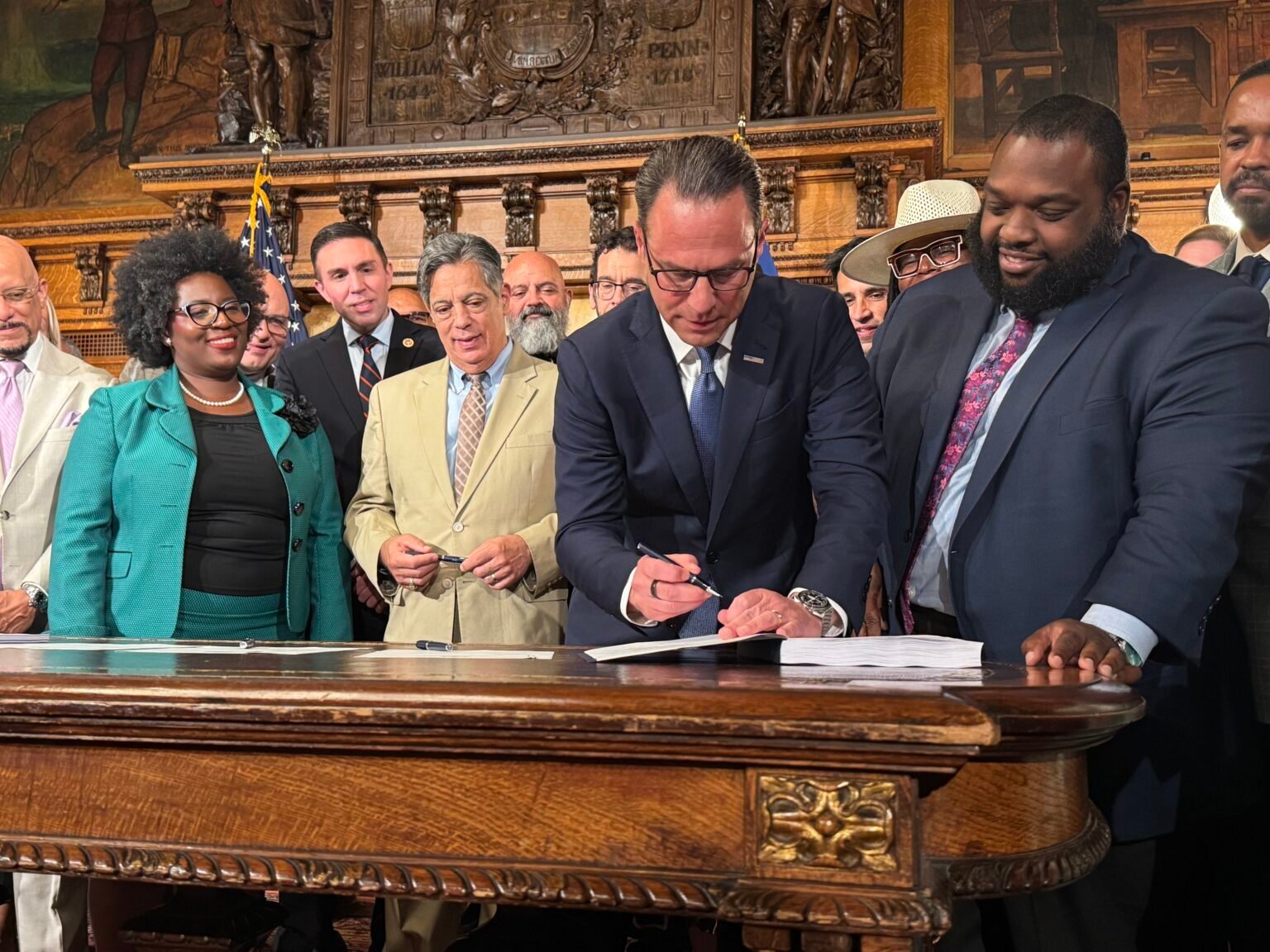
Governor Josh Shapiro signed Pennsylvania’s 2026–27 state budget into law on July 12, bringing an end to a relatively brief budget impasse nearly two weeks after the Commonwealth’s June 30 statutory deadline.
The bipartisan spending plan authorizes approximately $50.85 billion in General Fund expenditures, an increase of roughly $760 million over the prior fiscal year but more than $2 billion below the $53.3 billion proposal unveiled by Governor Shapiro in February. The budget preserves Pennsylvania’s nearly $8 billion Rainy Day Fund and is projected to leave the Commonwealth with approximately $8 billion in total reserves at the end of the fiscal year.
The final agreement reflects the realities of divided government in Harrisburg. It provides significant new investments in education, workforce development, public safety, infrastructure, and economic development while leaving several major policy and revenue questions unresolved.
Education Remains the Budget’s Largest New Investment
Public education was once again a central focus of the final agreement.
The budget increases major K–12 education subsidies by more than $678 million, bringing total state support for those programs to approximately $11.85 billion. That includes:
- A $565 million increase through the adequacy and tax equity formulas, directing additional resources toward historically underfunded school districts and districts facing high local tax burdens.
- A $58 million increase in Basic Education Funding, bringing the total appropriation to approximately $8.32 billion.
- A $55 million increase in Special Education Funding, bringing total funding to approximately $1.58 billion.
- Continued funding of $125 million for school facility improvements, including $25 million for the Solar for Schools program.
- Continued annual funding of $100 million for school safety and student mental health programs.
- Continued funding for universal free school breakfast and free menstrual hygiene products in schools.
The budget also includes several education-related policy changes. Schools will be required to provide at least 30 minutes of daily recess for students in full-day kindergarten through fifth grade, while school districts will face new facility inventory and virtual-student wellness requirements.
Although the new funding represents another significant step toward addressing Pennsylvania’s school funding adequacy gap, education advocates continue to argue that the Commonwealth remains billions of dollars short of the level identified as necessary to provide constitutionally adequate and equitable educational opportunities.
Workforce Development and Higher Education
The final budget continues the Commonwealth’s emphasis on workforce development and addressing shortages in education, child care, health care, and skilled trades.
Career and technical education programs receive an additional $10 million, bringing total annual state workforce development funding to approximately $193 million. The Student Teacher Stipend Program receives another $10 million, bringing total support to $40 million, while the Child Care Staff Retention and Recruitment Program receives a $5 million increase for a total of $30 million.
Additional workforce investments include:
- A $10 million increase for Grow PA scholarships.
- A $2.5 million investment in the Nurse Shortage Assistance Program.
- A new $3 million optometrist training initiative.
- Increased Pre-K Counts reimbursement rates.
- Continued support for direct support professional wages.
The budget also provides initial funding for Pennsylvania’s new performance-based funding formula for Penn State, the University of Pittsburgh, and Temple University. It includes a $5.9 million increase for the Pennsylvania State Grant Program to help maintain maximum student awards.
Economic Development and Infrastructure
One of the most notable economic development provisions is the creation of Innovate in PA 2.0, a $125 million initiative funded through insurance premium tax credits. The program is intended to provide capital to Pennsylvania startups, support clinical trials and life-sciences companies, and strengthen the Commonwealth’s broader innovation network.
The budget also:
- Maintains $20 million for the Main Street Matters program.
- Increases funding for the Historically Disadvantaged Business Program by $3.75 million.
- Continues Pennsylvania’s scheduled reduction of the Corporate Net Income Tax, which will fall to 6.99 percent.
- Provides $775 million over two fiscal years for shovel-ready state road projects, including $500 million during the current fiscal year.
Budget-related legislation also establishes several new special tax zones, including one connected to the Philadelphia Navy Yard, and requires data centers to report annual water and energy consumption to the Commonwealth. However, lawmakers did not repeal the existing sales tax exemption available to qualifying data center developments.
Public Safety, Mental Health, and Human Services
The budget provides $16.2 million to train four additional Pennsylvania State Police cadet classes, part of the administration’s broader commitment to adding 2,000 police officers and state troopers.
It also includes the Commonwealth’s first dedicated state appropriation for the 988 Suicide and Crisis Lifeline, providing $10 million, along with $5 million for walk-in mental health crisis stabilization centers.
Other human services and public safety investments include additional support for county child welfare agencies, rape crisis services, older adult protective services, ChildLine staffing, and programs serving older adults and Pennsylvanians with disabilities.
The agreement also provides cost-of-living increases for certain retired state employees, teachers, firefighters, law enforcement officers, and other public employees who retired before 2001 and had not received a pension adjustment in more than two decades.
What Was Left Out
While the final agreement includes significant spending and policy provisions, many of the most difficult issues under discussion during the spring and early summer were ultimately left for another day.
The budget does not include:
- A comprehensive regulatory and taxation structure for skill games.
- Legalization of adult-use recreational marijuana.
- A statewide minimum-wage increase.
- A new recurring revenue source for public transportation.
- The Governor’s proposed $1 billion bond initiative for housing, school facilities, and energy infrastructure.
- The proposed $100 million fund to respond to changes in federal funding.
- A private-school voucher program.
The absence of a skill-games agreement is especially noteworthy. Following a Pennsylvania Supreme Court ruling, lawmakers face an October deadline that may determine whether many existing machines can remain in operation. The issue is therefore likely to return quickly when the General Assembly resumes legislative activity.
Mass transit funding, housing affordability, energy costs, and the Commonwealth’s minimum wage also remain significant policy questions heading into the remainder of the legislative session.
Pennsylvania’s Longer-Term Fiscal Challenge Remains
The final budget avoids drawing from the Rainy Day Fund, but it does not fully resolve the Commonwealth’s underlying structural deficit.
The spending plan relies in part on transfers from special funds, unused agency balances, and the timing of Medicaid managed-care payments. Pennsylvania therefore continues to spend more through the General Fund than it collects in recurring annual revenue.
The Commonwealth retains substantial reserves, giving policymakers time to address that imbalance. However, the budget’s financing structure is likely to intensify future debates over spending growth, Medicaid costs, new recurring revenue, and the sustainability of Pennsylvania’s reserves.
What Comes Next
With the primary budget package now enacted, attention will turn to implementation, the release of program guidance, and the distribution of funding through state agencies.
For local governments, school districts, businesses, nonprofits, health and human services providers, and economic development organizations, the next several months will be important. Many opportunities created or funded through the budget will depend on agency guidelines, application periods, eligibility criteria, and additional legislative or administrative action.
The DT Firm will continue reviewing the enacted appropriations and related budget legislation, monitoring agency implementation, and identifying funding and policy opportunities affecting our clients and communities across Pennsylvania.